- Buy now
- Promotions
- Pet food
- Pet care
- Company
- The Company
- Why Farmina?
- Farmina Scientific Research
- Farmina Trainer Club
- Farmina Shelter Progam
- Farmina Breeder Club
- Farmina Groomer Club
- Farmina Vet Club
- Technology and Controls
- Farmina Genius Support
- Behind our Natural choice
- The Raw Materials
- Farmina Satisfaction Guarantee
- Cruelty Free Research
- i 5 parametri della salute
- Farmina Vet Life Wet Food
- Natural & Delicious
- Natural & Delicious Grain Free Wet Food
- VetLife - Nutrition Consultancy
- Natural & Delicious wet food
- Natural & Delicious wet food
- N&D Quinoa canine Neutered formulas
- Your nutritional company
- Farmina Genius Rewards
- Privacy policy
- Vetlife Bites
- Farmina Genius Club
- Farmina Genius Center Club
- Buy now
- Promotions
- Pet food
- Pet care
- Company
- The Company
- Why Farmina?
- Farmina Scientific Research
- Farmina Trainer Club
- Farmina Shelter Progam
- Farmina Breeder Club
- Farmina Groomer Club
- Farmina Vet Club
- Technology and Controls
- Farmina Genius Support
- Behind our Natural choice
- The Raw Materials
- Farmina Satisfaction Guarantee
- Cruelty Free Research
- i 5 parametri della salute
- Farmina Vet Life Wet Food
- Natural & Delicious
- Natural & Delicious Grain Free Wet Food
- VetLife - Nutrition Consultancy
- Natural & Delicious wet food
- Natural & Delicious wet food
- N&D Quinoa canine Neutered formulas
- Your nutritional company
- Farmina Genius Rewards
- Privacy policy
- Vetlife Bites
- Farmina Genius Club
- Farmina Genius Center Club
- my account
- Cart
Genius AI
4 Fun Ways to Keep Dogs Happy and Engaged
Physical exercise is essential for a dog’s happiness and wellbeing, but it’s not the whole picture. Dogs need mental stimulation too. Exploring, solving problems and using their senses play just as important a role in creating a fulfilling daily routine. Play and mental activity can be a great additional tool to support your pet's wellbeing.Many engaging activities can be done right at home. However, they should complement, never replace, regular walks, outdoor exploration and physical activity.
Why mental stimulation matters for dogs
Dogs naturally spend a lot of time exploring their environment and using their senses. Mental stimulation can help make everyday life more interesting while strengthening the bond between dogs and pet parents. The key is variety.
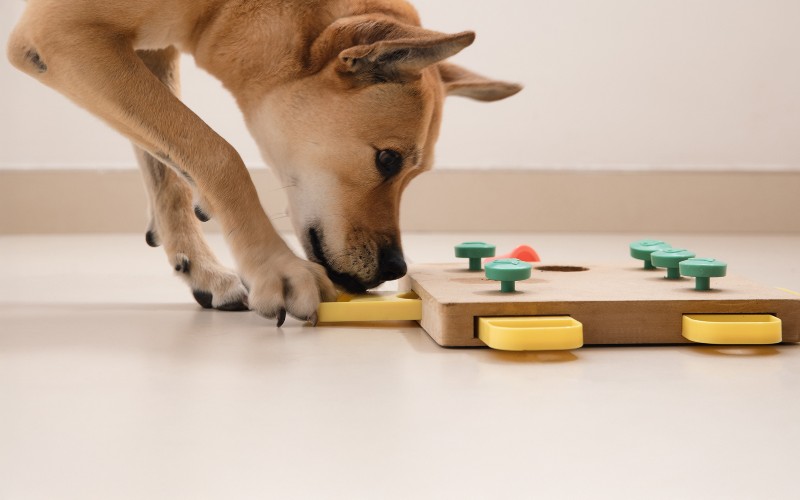
1. Try a food puzzle or interactive feeder
Food puzzles and interactive feeders encourage dogs to work for part of their meal instead of simply eating from a bowl. Depending on the type of puzzle, your dog may need to move objects, use their nose or paws, or figure out how to access the food. These activities can provide both mental stimulation and a more engaging mealtime experience.
There is one important thing to remember: food used during enrichment activities still counts towards your dog's daily calorie intake. Treats and food rewards should therefore be considered as part of their overall nutritional routine rather than simply added on top of their meals.
Your dog's nutritional needs depend on several individual factors, including age, size, lifestyle and activity level. Connect with our nutrition consultants to learn how to thoughtfully integrate snacks into your dog’s daily nutrition plan.
2. Teach your dog a new trick
Learning is a great way to keep your dog engaged at any stage of training. Whether you’re reinforcing the basics or introducing something new, teaching your dog helps challenge their brain while giving you quality time together. Keep training sessions short, positive and rewarding. Wondering how to teach your dog effectively? Learn how to use a simple command-and-reward approach!
3. Play “Find It”
“Find It” is a simple game that can be adapted to almost any home. Ask your dog to wait while you hide a favourite toy somewhere nearby. Then give them a cue to start searching. Once they understand the game, you can gradually make the hiding places more challenging.
For dogs who enjoy retrieving, you can combine searching with a short game of fetch. The aim isn't to make the game difficult. It's to encourage your dog to explore, think and use their senses.
4. Make your dog play with the right method and toy
There is no one-size-fits-all approach to play. Every dog has individual needs and preferences, which can be influenced by their breed, natural behaviours and personality. Ask yourself: “What was my dog bred to do?” This can help you choose the right type of play for them. And remember: for many dogs, the best part of play is sharing the experience with you. Whether it’s tug, chasing, retrieving or another interactive game, sharing the experience with you is an important part of the fun.
Some dogs, however, particularly enjoy chewing, tearing and shredding. Instead of trying to suppress these natural behaviours, give them an appropriate outlet. A simple cardboard box can become a great enrichment activity, allowing your dog to safely express their natural urge to shred. Always supervise your dog closely during this activity to make sure they do not swallow pieces of cardboard.
How much mental stimulation does a dog need?
There is no universal amount that works for every dog. Age, breed, personality, health, lifestyle and individual preferences all influence how much activity a dog enjoys. Some dogs may happily spend a long time working on a scent game, while others may prefer several short activities throughout the day.
The most important thing is to observe your dog. If they remain interested and engaged, you can gradually increase the challenge. If they become frustrated, tired or lose interest, make the activity easier or give them a break. Mental stimulation should be fun, not exhausting.