- Buy now
- Promotions
- Pet food
- Pet care
- Company
- The Company
- Why Farmina?
- Farmina Scientific Research
- Farmina Trainer Club
- Farmina Shelter Progam
- Farmina Breeder Club
- Farmina Groomer Club
- Farmina Vet Club
- Technology and Controls
- Behind our Natural choice
- Farmina Genius Support
- The Raw Materials
- Cruelty Free Research
- Our history
- Why Farmina
- i 5 parametri della salute
- Farmina Vet Life Wet Food
- Natural & Delicious
- Backed by science
- Vet Life Special Care
- Natural & Delicious Grain Free Wet Food
- Made in Our Kitchen
- Farmina Satisfaction Guarantee
- VetLife - Nutrition Consultancy
- Natural & Delicious wet food
- Natural & Delicious wet food
- Privacy policy
- Farmina Genius Rewards
- Vetlife Bites
- Farmina Genius Club
- Farmina Genius Center Club
- N&D Quinoa canine Neutered formulas
- Your nutritional company
- my account
- Cart
Genius AI
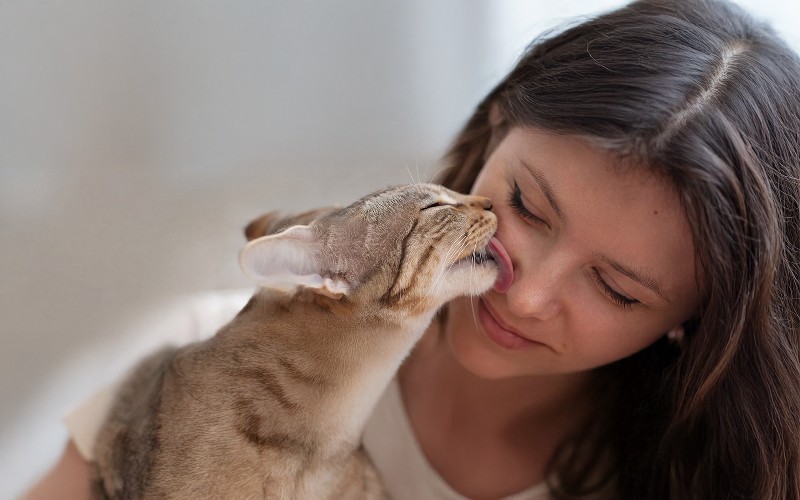
Why Does My Cat Lick Me? Affection, Grooming, and More
If your cat licks your hand, arm, hair, or even your face, you may wonder what they are trying to tell you. For cats, licking can be more than a way to investigate an interesting taste or smell. It can also be part of their social behavior and a familiar way of interacting with someone they trust.Cats use grooming for more than keeping their coats clean. Cats that live together may groom one another, a behavior known as allogrooming, for different reasons, from reinforcing social bonds and providing comfort to easing tension. When your cat licks you, it may reflect familiarity, comfort, curiosity, or even tension. Their body language can help you understand what they’re feeling. This doesn’t mean your cat thinks you are another cat, but rather that they are using a familiar form of social behavior with someone they feel comfortable around.
However, allogrooming can also occur in situations involving social tension, sometimes with one cat grooming another around the head and neck. In these contexts, the behavior may reflect or help manage tension rather than simply express affection.
Is my cat showing affection?
The part of your body your cat chooses to lick can have several explanations. Your hands may carry interesting scents or traces of food, while your hair and skin have their own smells and textures. Your cat may simply be investigating something interesting.
In other situations, licking may be part of social grooming. The context can help you understand what it means. If your cat licks you while relaxed, purring, or settling beside you, the behavior is more likely to be part of a comfortable social interaction. If licking happens alongside signs of stress or agitation, it may have a different explanation.
It can also become part of a familiar routine. If you respond with petting, conversation, or attention, your cat may learn to associate licking with these positive interactions.
Why does my cat lick me and then bite me?
Some cats alternate between licking and gentle biting during close interaction. This does not necessarily mean they have suddenly become aggressive. They may be overstimulated, wanting to end the interaction, or simply playing.
Pay attention to your cat’s body language. Relaxed posture, soft eyes, and calm movements suggest something different from flattened ears, a tense body, rapid tail movements, or attempts to move away. If your cat shows signs of discomfort, it is best to give them some space rather than continuing the interaction.
If my cat doesn’t lick me, does that mean he doesn’t love me?
Not at all. Every cat expresses affection in their own way, shaped by personality, early experiences, and habits. Some cats are chatty lickers, while others show love by curling up next to you, following you from room to room, headbutting your hand, or slowly blinking at you from across the sofa. A cat who doesn’t lick you is not loving you any less. He is simply speaking a different love language.