- Buy now
- Promotions
- Pet food
- Pet care
- Company
- The Company
- Why Farmina?
- Farmina Scientific Research
- Farmina Trainer Club
- Farmina Shelter Progam
- Farmina Breeder Club
- Farmina Groomer Club
- Farmina Vet Club
- Technology and Controls
- Farmina Genius Support
- Behind our Natural choice
- The Raw Materials
- Farmina Satisfaction Guarantee
- Cruelty Free Research
- i 5 parametri della salute
- Farmina Vet Life Wet Food
- Natural & Delicious
- Natural & Delicious Grain Free Wet Food
- VetLife - Nutrition Consultancy
- Natural & Delicious wet food
- Natural & Delicious wet food
- N&D Quinoa canine Neutered formulas
- Your nutritional company
- Farmina Genius Rewards
- Privacy policy
- Vetlife Bites
- Farmina Genius Club
- Farmina Genius Center Club
- Buy now
- Promotions
- Pet food
- Pet care
- Company
- The Company
- Why Farmina?
- Farmina Scientific Research
- Farmina Trainer Club
- Farmina Shelter Progam
- Farmina Breeder Club
- Farmina Groomer Club
- Farmina Vet Club
- Technology and Controls
- Farmina Genius Support
- Behind our Natural choice
- The Raw Materials
- Farmina Satisfaction Guarantee
- Cruelty Free Research
- i 5 parametri della salute
- Farmina Vet Life Wet Food
- Natural & Delicious
- Natural & Delicious Grain Free Wet Food
- VetLife - Nutrition Consultancy
- Natural & Delicious wet food
- Natural & Delicious wet food
- N&D Quinoa canine Neutered formulas
- Your nutritional company
- Farmina Genius Rewards
- Privacy policy
- Vetlife Bites
- Farmina Genius Club
- Farmina Genius Center Club
- my account
- Cart
Genius AI
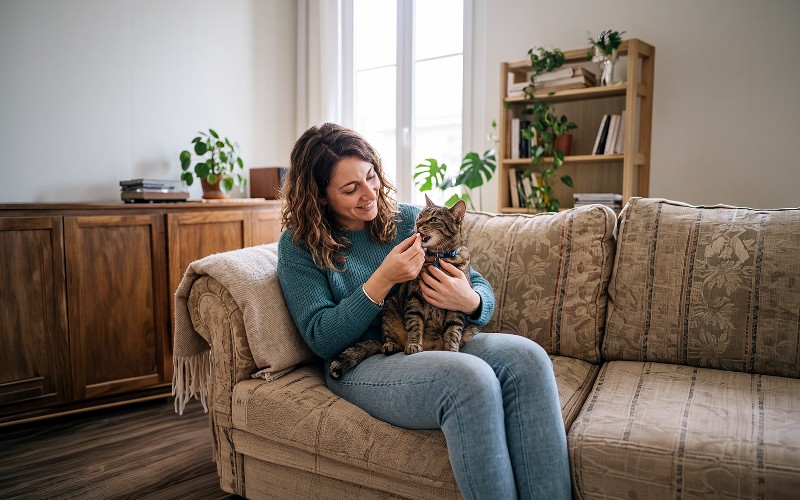
How to Give Pills to a Cat
If you have a cat, you most likely know that giving medicine can be challenging. With the right approach and preparation, administering medication can become easier and less stressful for both you and your cat.How to prepare before giving your cat medicine
Preparation is one of the most important steps when giving medicine to a cat. Before you begin:
- Read the medication instructions carefully.
- Wash your hands before handling the medication.
- Make sure you have the correct dose.
- Choose a quiet, comfortable place with minimal distractions.
A little trick to make medicine time easier
If your veterinarian confirms that the medication can be given with food, you may be able to conceal it in a small amount of food or an appropriate treat.
For cats that enjoy soft, creamy textures, Creamy Treats can be a convenient option for concealing certain medications. Even better? Their irresistible taste makes medication time something to look forward to!
Gently conceal the pill in a small amount of Creamy Treat and offer it to your cat as part of their usual routine. You can also offer Creamy Treats separately as a reward after successful administration, helping make medication time a more positive experience. When using a treat to conceal medication, make sure your cat consumes the entire portion containing the medicine. Never crush tablets or open capsules unless your veterinarian specifically tells you it is safe to do so, as some medications have special formulations that can be affected when altered.
How to give a pill to a cat
If concealing the pill in food or a treat isn't an option, your veterinarian may recommend giving it directly. This may seem daunting at first, but following a few simple steps can make the process easier and more comfortable for both of you:
- Stay calm and handle your cat gently.
- Position your cat securely, either on your lap or on a stable surface.
- Gently tilt your cat's head upward.
- Carefully open the mouth and place the pill as far back on the tongue as is safely possible.
- Close the mouth gently to encourage your cat to swallow.
- Reward your cat afterward with praise or a suitable treat.