- Buy now
- Promotions
- Pet food
- Pet care
- Company
- The Company
- Why Farmina?
- Farmina Scientific Research
- Farmina Trainer Club
- Farmina Shelter Progam
- Farmina Breeder Club
- Farmina Groomer Club
- Farmina Vet Club
- Technology and Controls
- Farmina Genius Support
- Behind our Natural choice
- The Raw Materials
- Farmina Satisfaction Guarantee
- Cruelty Free Research
- i 5 parametri della salute
- Farmina Vet Life Wet Food
- Natural & Delicious
- Natural & Delicious Grain Free Wet Food
- VetLife - Nutrition Consultancy
- Natural & Delicious wet food
- Natural & Delicious wet food
- N&D Quinoa canine Neutered formulas
- Your nutritional company
- Farmina Genius Rewards
- Privacy policy
- Vetlife Bites
- Farmina Genius Club
- Farmina Genius Center Club
- Buy now
- Promotions
- Pet food
- Pet care
- Company
- The Company
- Why Farmina?
- Farmina Scientific Research
- Farmina Trainer Club
- Farmina Shelter Progam
- Farmina Breeder Club
- Farmina Groomer Club
- Farmina Vet Club
- Technology and Controls
- Farmina Genius Support
- Behind our Natural choice
- The Raw Materials
- Farmina Satisfaction Guarantee
- Cruelty Free Research
- i 5 parametri della salute
- Farmina Vet Life Wet Food
- Natural & Delicious
- Natural & Delicious Grain Free Wet Food
- VetLife - Nutrition Consultancy
- Natural & Delicious wet food
- Natural & Delicious wet food
- N&D Quinoa canine Neutered formulas
- Your nutritional company
- Farmina Genius Rewards
- Privacy policy
- Vetlife Bites
- Farmina Genius Club
- Farmina Genius Center Club
- my account
- Cart
Genius AI
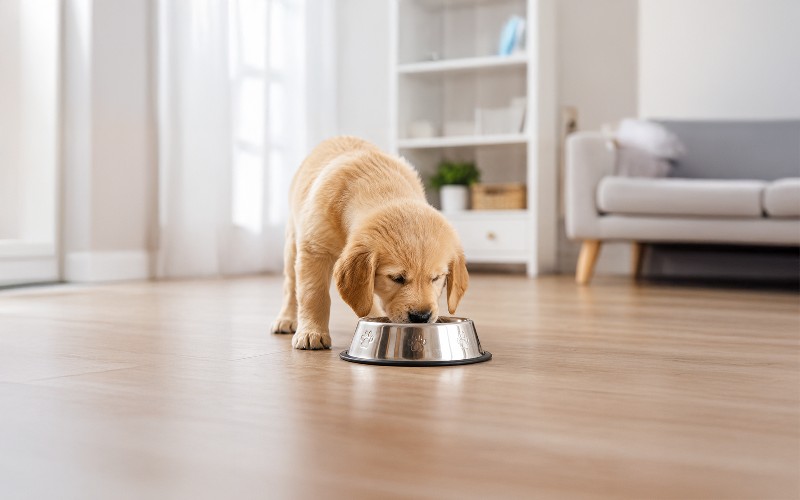
How Often Should You Feed Your Puppy?
Feeding your puppy the right way, and at the right times, is one of the most important steps you can take to set them up for a healthy, happy life. A consistent meal routine supports steady growth, balanced energy levels, good digestion, and overall well-being right from the start. Because puppies have small stomachs but are growing fast, they need smaller, more frequent meals throughout the day rather than one or two large ones.The exact feeding frequency will depend on their age, size, and breed and it will change as they grow.
8 to 12 weeks
At this stage, your puppy's stomach is tiny, but their energy needs are high. Aim for 4 meals a day, spaced evenly throughout the day. Small, frequent meals help keep their blood sugar stable and support healthy digestion.
3 to 6 months
As your puppy grows, you can gradually reduce to 3 meals a day. Their digestive system is becoming more capable of managing less meals a day, but they still need regular nourishment to fuel their development.
6 months and beyond
Most puppies can transition to 2 meals a day at around 6 months. However, this is also the point where size really matters.
Medium and large breeds (such as German Shepherds, Labradors, Golden Retrievers, and Great Danes) should always have 2 meals a day, never just one. These breeds are prone to bloat, also known as Gastric Dilatation-Volvulus (GDV). To help prevent it, avoid any intense physical activity for 3 to 4 hours after eating.
Wet Food for Puppies
Wet food can be an excellent option for puppies, especially during the early stages of growth. Its soft texture makes it easier to chew and digest while the higher moisture content supports hydration. Wet food is also highly palatable, which can be helpful for puppies with a reduced appetite. It can be fed on its own or combined with dry food, as long as portions are properly balanced to meet your puppy’s daily nutritional needs.Wet Food for Puppies
Help Your Puppy Digest Properly
After eating, your puppy's body is focused on digestion, so avoid intense physical activity for at least 3 to 4 hours after a meal. No running, jumping, or rough play.
There is one important exception though: house training. If your puppy is still learning to go to the toilet outside, a short and calm walk right after eating is actually the best thing you can do.
Why Dietary Continuity Matters
Another important aspect to consider is dietary continuity. When your puppy first arrives home, it is best to continue feeding the same food they are already accustomed to. Any change in diet should be introduced gradually and ideally under the guidance of your veterinarian, following a proper transition plan to avoid digestive upset.
Our experts recommend a 10-Day Gradual Transitional Plan:
- Days 1-3: 75% old food; 25% Farmina food
- Days 4-6: 50% old food; 50% Farmina food
- Days 7-9: 25% old food; 75% Farmina food
- Day 10: 100% Farmina food
Not sure what to feed your pet? Join the Genius Club for free and find the best deals tailored to their needs.