- Shop now
- Promotions
- Pet Food
- Pet Care
- Company
- About Us
- The Genius Club for Pet Parents
- Why Farmina?
- Our Ingredients
- Technology and Controls
- Our Fourth Dry Food Kitchen
- Farmina Scientific Research
- Farmina Genius AI
- Your Pet Nutrition Company
- Behind our Natural choice
- Career Opportunities
- Cruelty-Free Research
- For Vet Professionals
- Farmina Groomer Club
- Farmina Breeder Club
- Our history
- Farmina Shelter Program
- Why Farmina
- Share Your Farmina Story
- Backed by science
- Made in Our Kitchen
- Farmina's Satisfaction Guarantee
- N&D wet food
- UGC Terms & Conditions for Individuals
- Cookie policy
- UGC Terms & Conditions for Key Opinion Leaders
- Promotional Terms & Conditions
- Farmina Genius Center Club
- Vetlife Bites
- Farmina Genius Rewards
- download app FarminaGenius
- Shop now
- Promotions
- Pet Food
- Pet Care
- Company
- About Us
- The Genius Club for Pet Parents
- Why Farmina?
- Our Ingredients
- Technology and Controls
- Our Fourth Dry Food Kitchen
- Farmina Scientific Research
- Farmina Genius AI
- Your Pet Nutrition Company
- Behind our Natural choice
- Career Opportunities
- Cruelty-Free Research
- For Vet Professionals
- Farmina Groomer Club
- Farmina Breeder Club
- Our history
- Farmina Shelter Program
- Why Farmina
- Share Your Farmina Story
- Backed by science
- Made in Our Kitchen
- Farmina's Satisfaction Guarantee
- N&D wet food
- UGC Terms & Conditions for Individuals
- Cookie policy
- UGC Terms & Conditions for Key Opinion Leaders
- Promotional Terms & Conditions
- Farmina Genius Center Club
- Vetlife Bites
- Farmina Genius Rewards
- download app FarminaGenius
- my account
- Cart
Genius AI
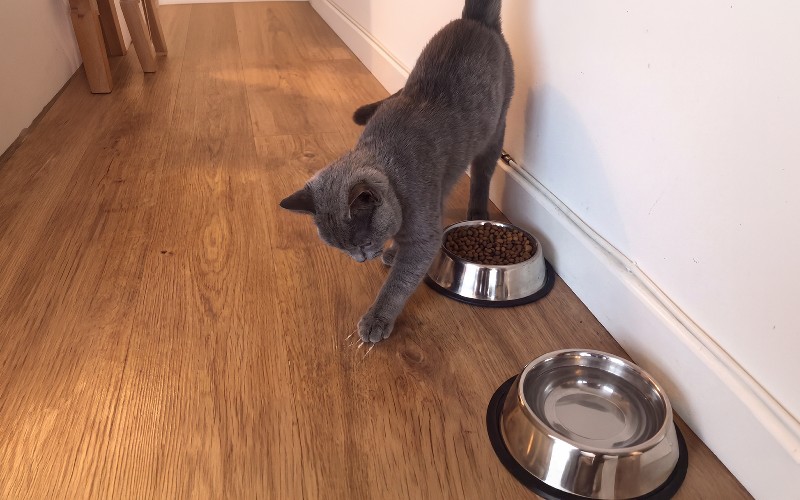
Why Does My Cat Scratch Around the Food Bowl After Eating?
Have you ever noticed your cat scratching the floor around their food bowl after eating? They may paw at the floor, make little digging motions or even scratch around the bowl as if they were trying to cover something. It may look strange, but in most cases, this is completely normal feline behavior. So, what is your cat trying to do?A behavior rooted in instinct
Cats are natural-born hunters, and many of their everyday behaviors are shaped by instincts that helped their wild ancestors survive. One widely accepted explanation for food-bowl scratching is that it relates to covering the scent of leftover food.
Their wild ancestor would have wanted to avoid leaving food behind, since it could attract other animals or reveal their presence to potential competitors or predators, so covering it may have helped keep a food source less noticeable.
Some behaviorists also point to scent glands in a cat's paws, suggesting the scratching could instead be a way of marking territory around a valued resource. Either way, your indoor cat doesn't need to protect their dinner from predators or rivals, but those instincts haven't disappeared.
Why does my cat do it even when there is no food left?
You may notice your cat scratching even when the bowl is completely empty. This is also not necessarily a cause for concern: it's the same instinct at work, now simply part of their eating routine regardless of whether there's anything left to cover.
Should I stop my cat from scratching?
Usually, there is no need to. If your cat is eating normally, maintaining a healthy body condition and otherwise behaving as usual, scratching around their food bowl is generally nothing to worry about.
However, it’s always important to look at the bigger picture. Eating habits are an important part of your cat's overall wellbeing, and changes in appetite or behavior can sometimes tell you that something has changed.
For example, keep an eye out for persistent changes such as:
- suddenly eating much more or much less than usual
- repeatedly refusing food
- showing difficulty chewing or swallowing
- vomiting or other digestive changes
- unusual restlessness or distress around mealtimes
- significant changes in weight or general behavior
Discover personalized support with the Farmina Genius Club
The Farmina Genius Club is designed to help pet parents make informed choices about their cat's nutrition and wellbeing throughout their life.
Through our services, you can access personalized nutritional support and a dynamic meal plan based on your cat's individual characteristics and needs.