- Shop now
- Pet Food
- Pet Care
- Company
- About Us
- The Genius Club for Pet Parents
- Why Farmina?
- Our Ingredients
- Technology and Controls
- Our Fourth Dry Food Kitchen
- Farmina Scientific Research
- Farmina Genius AI
- Your Pet Nutrition Company
- Career Opportunities
- Farmina's Satisfaction Guarantee
- Behind our Natural choice
- For Vet Professionals
- Cruelty-Free Research
- Farmina Groomer Club
- Farmina Breeder Club
- Farmina Shelter Program
- Share Your Farmina Story
- N&D wet food
- download app FarminaGenius
- Cookie policy
- Farmina Genius Rewards
- Vetlife Bites
- UGC Terms & Conditions for Key Opinion Leaders
- UGC Terms & Conditions for Individuals
- Promotional Terms & Conditions
- Farmina Genius Center Club
- Shop now
- Pet Food
- Pet Care
- Company
- About Us
- The Genius Club for Pet Parents
- Why Farmina?
- Our Ingredients
- Technology and Controls
- Our Fourth Dry Food Kitchen
- Farmina Scientific Research
- Farmina Genius AI
- Your Pet Nutrition Company
- Career Opportunities
- Farmina's Satisfaction Guarantee
- Behind our Natural choice
- For Vet Professionals
- Cruelty-Free Research
- Farmina Groomer Club
- Farmina Breeder Club
- Farmina Shelter Program
- Share Your Farmina Story
- N&D wet food
- download app FarminaGenius
- Cookie policy
- Farmina Genius Rewards
- Vetlife Bites
- UGC Terms & Conditions for Key Opinion Leaders
- UGC Terms & Conditions for Individuals
- Promotional Terms & Conditions
- Farmina Genius Center Club
- my account
- Cart
Genius AI
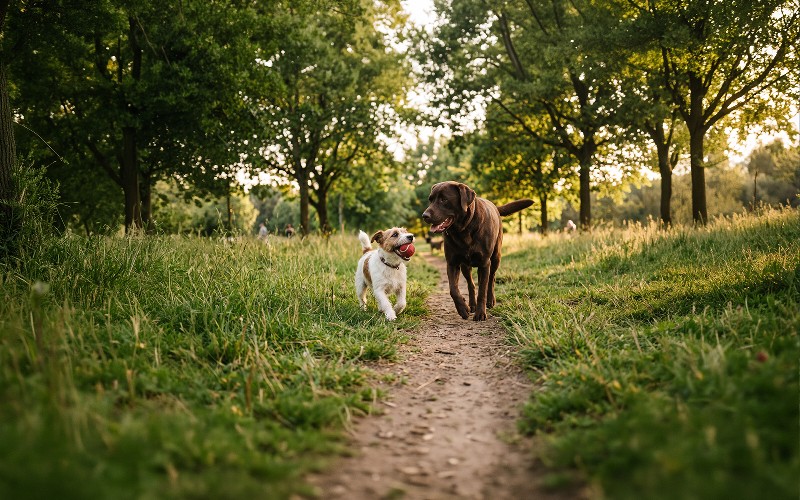
The Fundamental Needs of Every Dog
Every one of us wants the best for our pet. We choose the best food, the best care, and we give them all our love. But beyond food and affection, there are deeper needs that every dog should be allowed to experience, needs rooted not in trends, but in the biology and behavior of the species itself.
Here are four foundational needs every dog deserves.
FREEDOM TO EXPLORE
For a dog, exploring the world isn't a luxury, it's how they make sense of it. Through sniffing, walking new routes, and investigating their surroundings, dogs gather information about their environment in a way that's central to their wellbeing. A walk that allows time to sniff and explore is doing far more than exercising the legs: it's exercising the mind.
This need is especially important during puppyhood, when exposure to new environments, surfaces, sounds, and experiences helps shape a confident, well-adjusted adult dog. But the need to explore doesn't disappear with age — novelty and environmental engagement continue to support mental stimulation and emotional balance throughout a dog's life.
ENOUGH EXERCISE — ON THEIR TERMS
Don't be fooled by size. A small dog isn't automatically a low-energy dog, and a large dog doesn't always need to run for miles. Every dog has individual exercise needs shaped by breed, age, health, and personality, and one of the most important things a pet parent can do is learn to listen to their own dog rather than apply a generic rule. It isn't only about walks: play is just as important, and it's worth paying attention to what kind of play your dog actually enjoys.
Physical activity supports cardiovascular health, healthy weight, and joint mobility, but it also plays a significant role in emotional regulation. Dogs that don't get enough movement often release pent-up energy in less desirable ways: excessive barking, destructive chewing, or general agitation.
SOCIALIZATION WITH THEIR OWN KIND
Healthy socialization doesn't mean every dog must play with every other dog they meet. It means a dog has had enough positive, well-managed exposure to other dogs to be able to read their body language, communicate appropriately, and feel comfortable simply being around them, whether that leads to play, polite disinterest, or calm coexistence.
A dog who has had little positive contact with other dogs may struggle to read social cues correctly later in life, which can lead to fear or reactivity, not because the dog is "bad," but because the language was never learned.
BEING UNDERSTOOD
Dogs communicate through body posture, ear position, tail carriage, facial tension, and subtle behavioral signals. Many behaviors that humans label as "stubborn" or "naughty" are, in fact, a dog's honest attempt to communicate discomfort, stress, or a simple biological need.
Learning to recognize the early, quiet signs of stress, a lip lick, a yawn out of context, turning the head away, a tucked tail, allows pet parents to respond before a situation escalates, rather than after. This isn't about becoming an expert in canine ethology overnight; it's about approaching your dog with curiosity instead of assumptions and accepting that what looks like "misbehavior" is often simply a dog trying to tell us something in the only language they have.
These four needs aren't a checklist. They're a lens, one that shifts the question from what is my dog doing wrong to what does my dog need from me right now. No one knows a dog better than the person who lives with them. That's not a small thing. It's actually the whole point.
Not sure what to feed your pet? Join the Genius Club for free and find the best deals tailored to their needs.